How to Help Your Child Keep a Strong Islamic Identity While Growing Up in the West
For Muslim families raising children in the United States, the United Kingdom, Europe, or Australia, one quiet worry sits beneath the daily routine of school runs and homework: Will my child grow up with a strong connection to Islam?
It is a worry rooted in love. You want your child to succeed in their new home, to speak the language fluently, to do well in school and build a good life. But you also want them to pray, to read the Quran, to know right from wrong the way you were taught, and to carry their faith with confidence rather than embarrassment. Holding both of these at once can feel like a balancing act with no instructions.
The good news is that a strong Islamic identity is not something children either have or do not have. It is something that is built, gently and consistently, over years. Below are practical, realistic ways to nurture it, even in a busy household far from a Muslim-majority environment.
Why Islamic Identity Needs to Be Actively Nurtured
In a Muslim-majority country, faith is reinforced everywhere: the call to prayer, the rhythm of Ramadan, friends and neighbours who share the same values. Children absorb their identity from the world around them almost without effort.
In the West, that ambient reinforcement is largely absent. The surrounding culture is not hostile in most places, but it is silent on Islam. If the home does not actively provide what the environment no longer supplies, a child can quietly drift, not through rebellion, but simply through absence. Recognising this is the first step. Identity here must be intentional, not assumed.
1. Make the Quran a Normal Part of Daily Life
Children model what they see repeatedly. When the Quran is part of the ordinary texture of home life, rather than a special occasion, it becomes part of who they are.
This does not require hours each day. A few minutes of recitation in the morning, listening to a beautiful reciter during the school commute, or a short shared reading after dinner all signal that the Quran belongs in everyday life. Consistency matters far more than duration. Five minutes every day shapes a child more than two hours once a month.
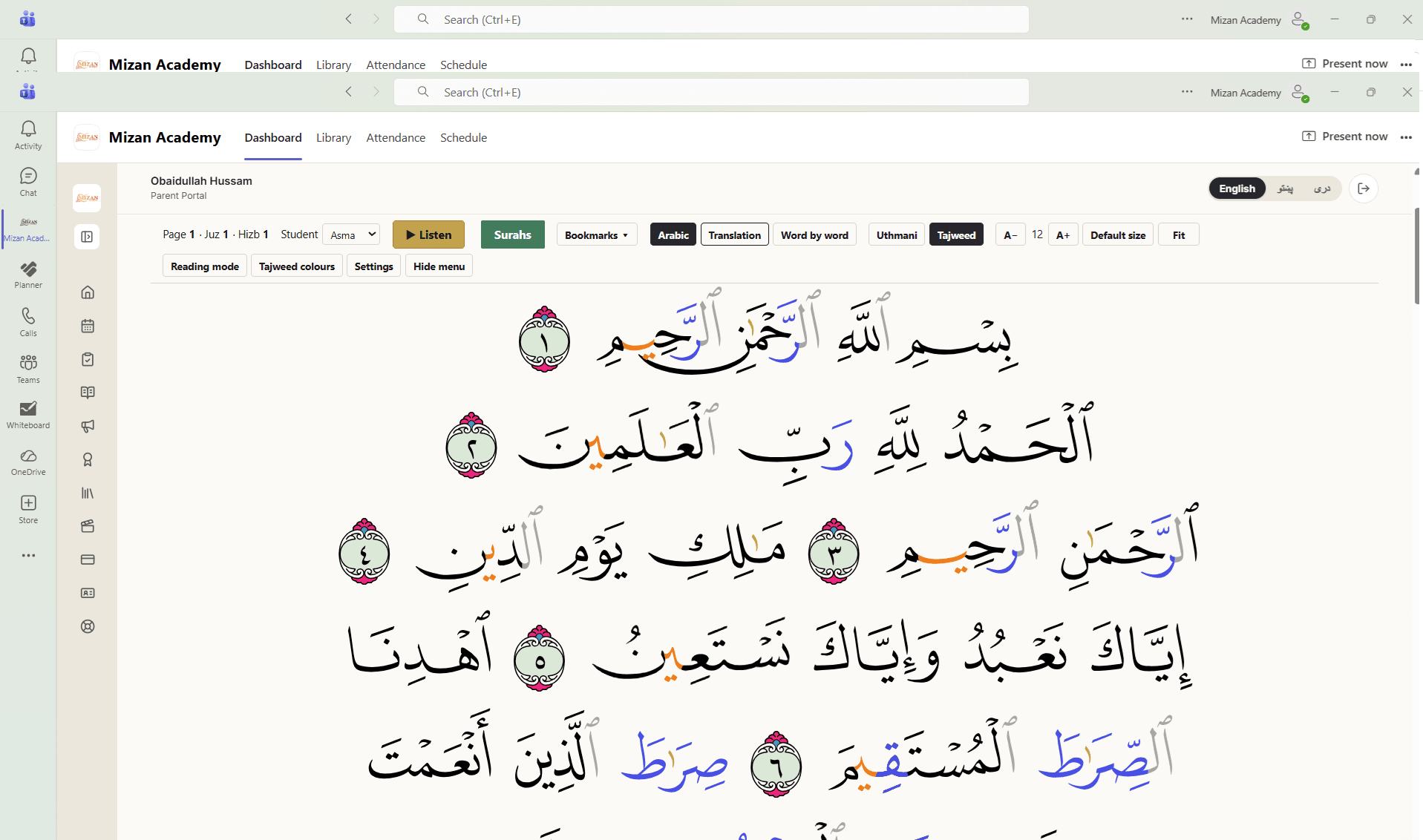
For many diaspora families, the practical challenge is teaching correct recitation when the parents themselves are busy or unsure of their own Tajweed. This is where structured online Quran classes with a qualified teacher can carry the load, giving your child proper guidance several times a week while you focus on keeping the habit alive at home.
2. Teach the "Why," Not Just the "What"
A child who is only told what to do will often abandon it the moment they are free to choose. A child who understands why carries it willingly.
When your child asks why Muslims pray, why we fast, or why we avoid certain things, treat the question as a gift rather than a challenge. These are the moments identity is forged. Answer with warmth and honesty at their level. A seven-year-old needs a different answer than a fourteen-year-old, but both deserve a real one.
This is exactly why a complete Islamic education includes more than recitation. Understanding Aqeedah (what we believe), Fiqh (how we practise), Seerah (the life of the Prophet ﷺ), and Akhlaq (character) gives a child the reasons behind the rituals. A child who knows the story of the Prophet ﷺ and understands the beliefs behind their prayers grows up with conviction, not just habit.
3. Surround Them With Belonging
Identity is deeply social. A child who feels they are part of a community of other Muslim children learning the same things feels normal and confident in their faith. A child who feels they are the only one can feel isolated and self-conscious.
Seek out that sense of belonging wherever you can: the local mosque, family friends, Islamic events, and structured learning environments where your child sees peers on the same journey. When a child realises that thousands of other children around the world are learning the Quran just like them, their faith stops feeling like a private burden and starts feeling like a shared treasure.
4. Protect Their Character as Carefully as Their Knowledge
Islamic identity is not only about knowledge and ritual. It is about akhlaq — honesty, kindness, respect for parents, patience, and gratitude. In many ways, character is the most visible and lasting expression of faith.
Praise good character openly. Model it yourself, especially in how you treat others and how you handle frustration. A child who grows up associating their faith with being a good, kind, trustworthy person carries an identity that is resilient because it is woven into who they are, not just what they do.
5. Build Routine and Structure Around Learning
Children thrive on routine, and faith is no exception. Random, occasional Islamic learning rarely sticks. A predictable structure — set class times, clear expectations, gentle accountability — turns learning into a habit and a habit into an identity.
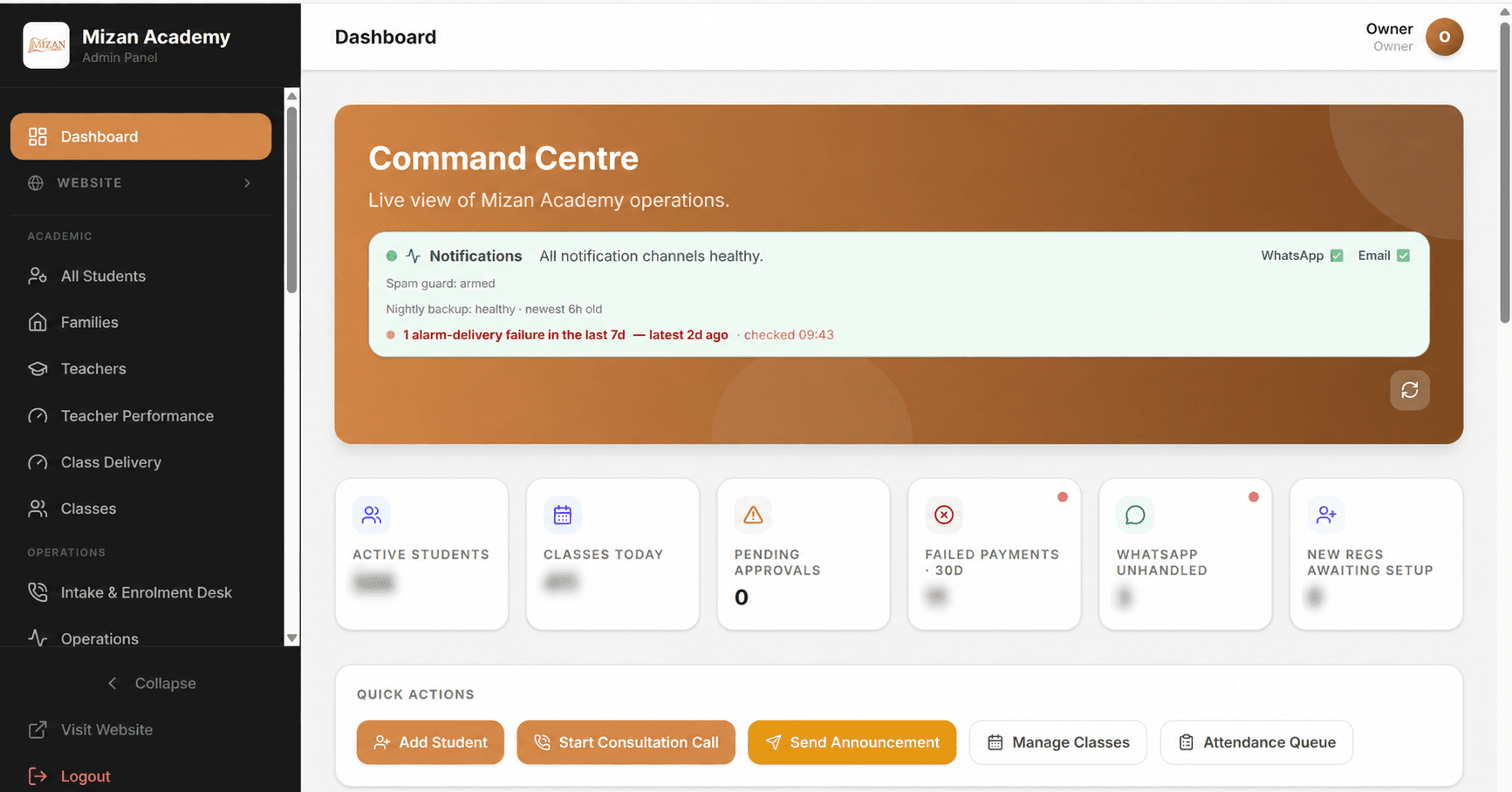
This is one of the strongest arguments for a structured, institutional approach to Islamic education rather than ad-hoc lessons. When classes happen on a reliable schedule, when progress is tracked, and when there is a clear path from one level to the next, children develop discipline alongside knowledge — and discipline is itself a profound Islamic value.
6. Be Patient and Keep the Door Open
Finally, remember that identity is a long journey with natural ups and downs. There will be seasons where your child is enthusiastic and seasons where they are distracted. This is normal. The goal is not perfection in any given week, but a steady, loving consistency over years.
Keep the relationship warm. A child who associates Islam with love, patience, and belonging will return to it again and again throughout their life, even after the inevitable wobbles of growing up. A child who associates it only with pressure and conflict may not. Your gentleness is part of the curriculum.
Bringing It All Together
Raising a child with a strong Islamic identity in the West is absolutely achievable. It asks for intention rather than perfection: a little Quran every day, honest answers to real questions, a sense of belonging, attention to character, and a reliable structure that turns learning into habit.
You do not have to carry all of this alone. A structured Islamic education programme can provide the consistent Quran teaching, the foundational knowledge of belief and practice, and the sense of community that busy diaspora families find hardest to supply on their own — while you focus on the warmth and routine of home.
At Mizan Academy, we help Muslim families around the world give their children exactly this: structured, professional Quran and Islamic studies built around the needs of diaspora families. Every class combines Quran recitation with the foundations of belief, practice, the life of the Prophet ﷺ, and good character — delivered by qualified, caring teachers on a schedule that fits your family.
Book a free consultation today and take the first step in giving your child a confident, lifelong connection to their faith, insha'Allah.